
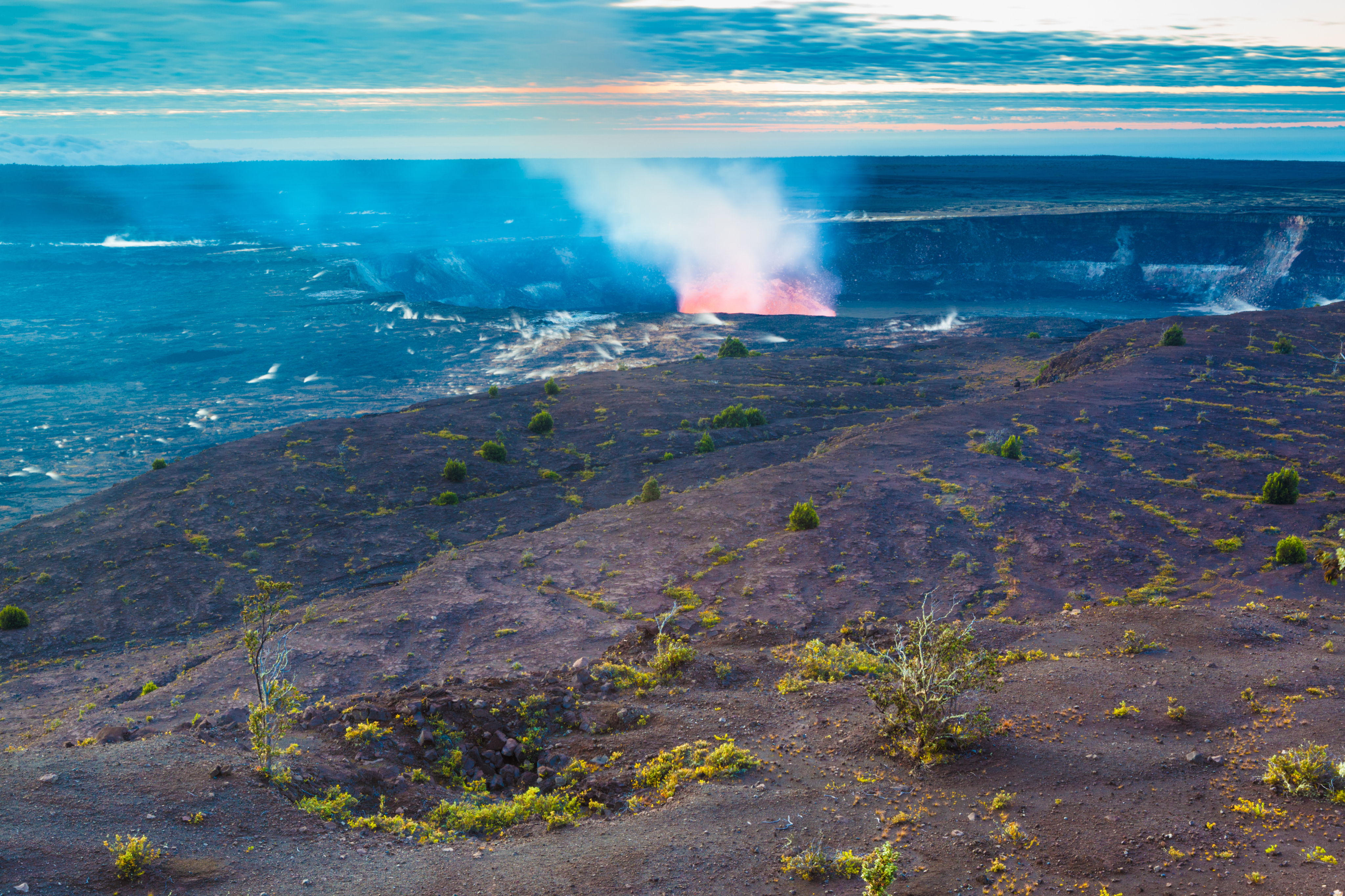
The best day trips to Hawaiʻi Volcanoes National Park from Hilo are a summit loop along Crater Rim Drive with stops at Nāhuku lava tube and the Kīlauea Iki Trail, a scenic drive down Chain of Craters Road to the Puʻuloa Petroglyphs and Hōlei Sea Arch, and an evening trip to watch Kīlauea's eruption glow from the caldera rim. The park entrance is about 30 miles southwest of Hilo on Highway 11, and a seven-day vehicle pass costs $30.
Hale Kawili, at 430 West Kawili Street, is just steps from UH Hilo and Hawaiʻi Community College, so a trip to the park can start as soon as a morning class ends. Complimentary resident parking also makes it easy to keep a car nearby for weekend drives up the mountain.
Hale Kawili Guide to Hawaiʻi Volcanoes National Park Day Trips
Few college towns have an active volcano less than an hour away. Hawaiʻi Volcanoes National Park covers rainforest, lava tubes, crater floors, and a coastline built by lava flows, and it is a UNESCO World Heritage Site and International Biosphere Reserve. Because the park is so close to campus, students can visit it as a half-day break between study sessions or spend a full Saturday there, without planning a big trip.
How Do You Get to Hawaiʻi Volcanoes National Park From Hilo?
Getting to the park from Hilo is simple whether you have a car or not. Both options use Highway 11, which runs from Hilo straight up to the Kīlauea summit area.
Driving Takes About 45 Minutes
From the UH Hilo area, the drive to the park entrance takes roughly 45 minutes. The route climbs through Kurtistown, Mountain View, and Volcano Village, and the entrance station sits between mile markers 28 and 29. There are no gas stations inside the park, so fill up in Hilo before you go, especially if you plan to drive Chain of Craters Road.
The Free Hele-On Bus Reaches the Park Seven Days a Week
Hele-On, Hawaiʻi County's public bus, is fare-free for all passengers through December 31, 2028. Route 11 (Red Line) runs from Moʻoheau Bus Terminal in downtown Hilo to a stop on Crater Rim Drive near the visitor center area, and the ride takes a little over an hour. The bus itself is free, but riders who get off inside the park still pay the $15 per-person entrance fee.
| Leaves Moʻoheau Bus Terminal | Arrives at Park | Leaves Park | Arrives in Hilo |
|---|---|---|---|
| 7:40 AM | 8:53 AM | 9:15 AM | 10:29 AM |
| 10:40 AM | 11:53 AM | 12:15 PM | 1:29 PM |
| 1:40 PM | 2:53 PM | 3:15 PM | 4:29 PM |
| 4:40 PM | 5:58 PM | 6:15 PM | 7:29 PM |
For a full day by bus, take the 7:40 AM departure and plan to catch the 3:15 PM or 6:15 PM bus back. Screenshot the schedule before you leave, because cell service inside the park can be spotty.
How Much Does It Cost to Visit Hawaiʻi Volcanoes National Park?
Entry to the park is affordable, especially if you split it with roommates. The entrance station is cashless, so bring a credit or debit card.
| Pass Type | Cost | What It Covers |
|---|---|---|
| Private vehicle | $30 | Everyone in one non-commercial vehicle for 7 days |
| Motorcycle | $25 | One motorcycle for 7 days |
| Walk-in, bike, or bus rider | $15 | One person (age 16+) for 7 days |
| Hawaiʻi Tri-Park Annual Pass | $55 | One year at Hawaiʻi Volcanoes, Haleakalā, and Puʻuhonua o Hōnaunau |
| America the Beautiful Pass | $80 (U.S. residents) | One year at national parks and federal recreation sites nationwide |
If you plan to visit more than twice a year, the $55 Tri-Park Annual Pass pays for itself quickly. It's one of the best deals available to UH Hilo students who want to make the park a regular weekend stop.
What Are the Best Day Trips Inside the Park?
Most students pick one of two routes: a trip focused on the summit area, or a longer drive down to the coast. Each of the stops below can be its own short outing or part of a full day.
Crater Rim Drive Covers the Summit Highlights
Crater Rim Drive is the main road around the summit of Kīlauea, and it leads to steam vents, crater overlooks, and trailheads. The Kīlauea Visitor Center is currently closed for renovation, so visitor services are running from a temporary Welcome Center at Kīlauea Military Camp. Start there to check which areas are open that day and to find out about free ranger-guided programs, which run almost every day.
Nāhuku Is a Short Walk Through a Lava Tube
Nāhuku, also called Thurston Lava Tube, is a lit tunnel that flowing lava left behind about 500 years ago. The short walk to it passes through tree ferns and native rainforest. It's one of the easiest stops in the park, and it's much quieter if you arrive before 9 a.m.
Kīlauea Iki Trail Crosses a Solidified Lava Lake
For one real hike, Kīlauea Iki is the classic choice. The 3.3-mile loop drops 400 feet through rainforest to the floor of a crater that held a lava lake after its 1959 eruption, when fountains reached 1,900 feet high. Plan on two to three hours. Parking at Kīlauea Iki Overlook is very limited, so the Devastation Trailhead is often a better place to start.
Chain of Craters Road Descends to the Coast
Chain of Craters Road runs 19 miles from the summit to the ocean and drops about 3,700 feet along the way, passing pit craters and lava fields. The drive takes about 45 minutes each way. The road dead-ends near the coast, so you return the same way you came.
Puʻuloa Petroglyphs
Past mile marker 16, a trail of about 1.4 miles round trip crosses old pāhoehoe lava to Puʻuloa, the largest petroglyph field in Hawaiʻi. A boardwalk protects the carvings, so stay on it.
Hōlei Sea Arch
Just before the end of the road, a very short walk leads to Hōlei Sea Arch, a 90-foot lava rock arch shaped by waves hitting the cliffs.
Whether you have a few hours or a full day, these stops can be combined in different ways, so each visit can feel different from the last.
Can You See Lava at Hawaiʻi Volcanoes National Park?
Yes, often, though it's never guaranteed. Kīlauea has been erupting on and off from Halemaʻumaʻu crater since December 2024. All activity stays inside a closed area of the park, but it can be seen from open viewing areas along the caldera rim. Activity changes from week to week. Fountaining episodes draw big crowds and can close nearby overlooks, and during quieter stretches the crater may only glow after dark.
The best approach is to check the USGS Hawaiian Volcano Observatory updates and the park's current conditions page before you leave. If the glow is visible, an evening drive makes a memorable weeknight trip, since the summit is less than an hour from campus. Just be ready for cold temperatures and heavier traffic when activity is high.
What Should You Bring on a Volcanoes Day Trip?
The summit sits around 4,000 feet above sea level, so the weather can be very different from Hilo's. A little preparation makes the day much more comfortable.
- Plenty of water: The park asks visitors to bring their own drinking water, and the trails have none.
- A rain jacket and warm layer: The summit is often cool, windy, and wet, even when Hilo is sunny.
- Sturdy, closed-toe shoes: Lava rock is sharp and uneven, especially on the Kīlauea Iki crater floor.
- Sun protection: Open lava fields and the lower Chain of Craters Road get hot, with almost no shade.
- Snacks or a packed lunch: Food options inside the park are limited, and packing your own keeps the trip cheap.
- A flashlight or headlamp: It's essential for evening eruption viewing and walking back to your car in the dark.
- Offline maps and schedules: Cell coverage is unreliable in parts of the park, so download what you need in Hilo.
Visitors with respiratory or heart conditions should also check air quality before going, since volcanic gas (vog) can build up near the summit during active periods.
How Can You Fit the Whole Park Into One Day?
If you only have one free Saturday, this route covers the park's highlights in a logical order and finishes in time for possible eruption viewing.
- Leave Hilo by 7:30 a.m. Arriving early means easier parking and a quieter visit to Nāhuku.
- Stop at the Welcome Center. Check closures, the eruption status, and the day's ranger programs.
- Hike Kīlauea Iki mid-morning. You'll finish before the crater floor gets hottest.
- Drive Chain of Craters Road after lunch. Stop at the pit craters, Puʻuloa, and Hōlei Sea Arch.
- Return to the caldera rim at dusk. If there is activity, stay for the glow before driving back to Hilo.
This plan fills a full day, but it's easy to split into two shorter trips, since your entrance pass is good for seven days.
Hawaiʻi Volcanoes Is an Easy Day Trip From Hale Kawili
With a free bus, affordable entrance passes, and trails for every fitness level, Hawaiʻi Volcanoes National Park is one of the best reasons to go to school in Hilo. Whether you're hiking across a lava lake, driving down to the sea arch, or watching Kīlauea glow at night, the park is close enough to visit again and again throughout the semester.
Hale Kawili helps make those trips easy. It's just steps from UH Hilo and Hawaiʻi Community College, residents get complimentary parking for their car, and there's an on-site laundry room for muddy hiking clothes. Once you're home, 1-Gig high-speed internet makes it easy to upload trip photos and catch up on assignments. Two-bedroom apartments give you room to plan the next adventure with your roommate.
Frequently Asked Questions
How far is Hawaiʻi Volcanoes National Park from UH Hilo?
The park entrance is about 30 miles southwest of Hilo on Highway 11, roughly a 45-minute drive from the UH Hilo area.
Can you get to Hawaiʻi Volcanoes National Park without a car?
Yes. Hele-On Route 11 (Red Line) runs from Hilo's Moʻoheau Bus Terminal to the park seven days a week, and it's free for all passengers through 2028. Riders still pay the park's $15 per-person entrance fee.
How much does it cost to get into Hawaiʻi Volcanoes National Park?
Entry costs $30 per private vehicle, $25 per motorcycle, or $15 per person on foot, bike, or bus, and each pass is valid for seven days. The $55 Hawaiʻi Tri-Park Annual Pass covers a full year.
Can you see lava at Hawaiʻi Volcanoes National Park right now?
Often, yes. Kīlauea has been erupting on and off inside Halemaʻumaʻu crater since December 2024, and the activity can be seen from open areas along the caldera rim, though conditions change often. Check USGS and park updates before you go.
What is the best hike in Hawaiʻi Volcanoes National Park for beginners?
Nāhuku lava tube is the easiest option, and the Kīlauea Iki Trail is the most popular half-day hike. Kīlauea Iki is a 3.3-mile loop with a 400-foot descent and climb back out.
Are there free days at Hawaiʻi Volcanoes National Park?
Yes. The National Park Service waives entrance fees on several days each year. The next one is Tuesday, October 27, 2026, for Theodore Roosevelt's birthday.